
They Healed
a Nation.
Barred from hospitals, denied residencies, excluded from medical schools — African American physicians and healers built their own institutions and advanced medicine for everyone. The record begins before the exclusions end.
–1800
Early Republic
American medicine begins with African knowledge that was taken without credit.
In 1721, Boston faced a devastating smallpox epidemic. Onesimus, an enslaved African man owned by Cotton Mather, described variolation — a technique of deliberate inoculation practiced across West and Central Africa — which Mather then advocated publicly. The practice worked, dramatically reducing mortality. American preventive medicine begins with the knowledge of an enslaved man whose name was nearly lost to history.
Throughout the colonial and early republic period, enslaved Africans served as medical subjects without consent — their bodies used in surgical experiments that advanced American medical science. J. Marion Sims, celebrated as the “father of modern gynecology,” developed his surgical techniques through operations performed on enslaved Black women in Alabama without anesthesia between 1845 and 1849. The women — Anarcha, Betsey, and Lucy among them — bore the cost of knowledge they never received credit for providing.
“They practiced on us. They were trained on us. They built the profession on our bodies. Then they barred us from entering it.”
Two Americas — ERA III Medical DocumentationOnesimus — The First American Inoculation
Onesimus described variolation to Cotton Mather during Boston’s 1721 smallpox epidemic. The technique — practiced across West Africa — was applied over fierce public resistance. It reduced mortality. He was never credited. His name survived only because Mather recorded it. American preventive medicine begins here.
First American InoculationAnarcha, Betsey & Lucy — Unconsented Medical Subjects
J. Marion Sims developed the surgical repair of vesico-vaginal fistula — a foundational technique in gynecological surgery — through repeated operations on at least three enslaved Black women: Anarcha (operated on 30 times), Betsey, and Lucy. No anesthesia was used. They could not refuse. Their suffering produced the technique. Their names were not in the medical textbooks for 150 years.
Medical Subject Without ConsentJames Durham — First Black American Physician
Durham was born enslaved and taught medicine by the physicians who owned him. He eventually purchased his freedom and practiced medicine in New Orleans and Philadelphia. Noted physician Benjamin Rush described him as highly skilled. He practiced without a formal degree — because no medical school in America would admit a Black man. He is documented as the first African American to practice medicine in the United States.
First Black American Physician–1945
to WWII
The first open-heart surgery. The blood bank. Both performed by Black doctors locked out of the American Medical Association.
On July 9, 1893, Dr. Daniel Hale Williams performed the first successful open-heart surgery in recorded history at Provident Hospital in Chicago — a hospital he founded because Black patients were refused care at white hospitals and Black doctors were denied staff privileges. He repaired the pericardium of a stabbing victim named James Cornish. Cornish lived for 50 more years. Williams was excluded from the American Medical Association for most of his career.
Dr. Charles Drew developed the blood plasma preservation and large-scale blood banking system that saved hundreds of thousands of lives in World War II. He directed the first American Red Cross blood program. Then the U.S. military ordered blood supplies segregated by race. Drew — who knew the order had no scientific basis — protested publicly and resigned. The man who invented the system that saved American soldiers was told his blood could not mix with theirs.
“There is no scientific basis for the segregation of the blood of different races.”
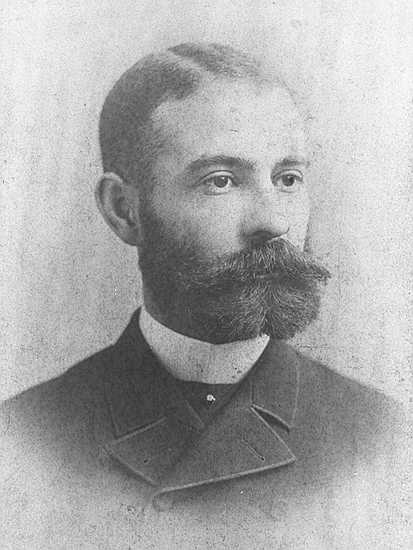
Dr. Charles Drew, 1942Dr. Daniel Hale Williams — First Open-Heart Surgery
Williams founded Provident Hospital in 1891 — one of the first hospitals in America with an interracial staff — because Black patients and doctors had no access to Chicago’s white hospitals. On July 9, 1893, he repaired a stab wound to the pericardium of James Cornish without the benefit of blood transfusion, antibiotics, or modern anesthesia. Cornish lived 50 more years. Williams was one of the few Black charter members of the American College of Surgeons.
First Open-Heart Surgery · 1893Dr. Charles Drew — Blood Bank System
Drew’s research on blood plasma storage and his design of the large-scale blood bank system became the standard for wartime and peacetime medicine. He directed Blood for Britain — the first large-scale blood banking operation — and the American Red Cross blood drive. When the military segregated blood by race, he resigned in protest. The Red Cross maintained the policy for years. Drew died in 1950 at age 45 after a car accident near Burlington, NC.
Creator Barred From His Own SystemMeharry & Howard — The Only Doors Open
After the 1910 Flexner Report restructured American medical education, only two medical schools remained open to Black students: Meharry Medical College (Nashville) and Howard University College of Medicine (Washington, D.C.). For decades they trained the majority of Black physicians in America — doctors who then returned to communities denied care by white hospitals. By 1920, they produced over 80% of all Black physicians in the United States.
80% of Black Physicians · 1920–Now
They pioneered cardiac surgery, the blue baby procedure, HIV research, and the science of sickle cell — while fighting for the right to practice in the same hospitals as their white colleagues.
Dr. Vivien Thomas — a carpenter’s son with no medical degree — developed the surgical technique for repairing Tetralogy of Fallot, the heart defect that caused “blue baby syndrome.” He trained the surgeons at Johns Hopkins, standing at the operating table guiding their hands. The procedure was credited to Dr. Alfred Blalock and Dr. Helen Taussig for decades. Thomas received no academic credit. He worked at Hopkins as a janitor’s pay grade for years while performing cardiac surgery.
Dr. Jane Cooke Wright pioneered chemotherapy research in the 1950s and 1960s, developing techniques for testing cancer drugs on human tissue rather than mice — a methodology that became the foundation of modern chemotherapy. She was appointed Associate Dean of New York Medical College in 1967, becoming the highest-ranking Black woman at an American medical school at the time. Her work is in every chemotherapy protocol used today.
“He had the hands of a surgeon and the mind of one. We just hadn’t given him the title.”
Dr. Alfred Blalock, on Vivien ThomasVivien Thomas — The Blue Baby Procedure
Thomas developed the Blalock-Thomas-Taussig shunt — the surgical procedure that saved children born with “blue baby” heart defects. He perfected the technique on over 200 dogs before the first human procedure. He trained the surgeons who performed it, standing at the operating table directing their hands. He was paid as a janitor for years. Johns Hopkins awarded him an honorary doctorate in 1976 — 32 years after the procedure.
Credit Delayed 32 YearsDr. Jane Cooke Wright — Chemotherapy Pioneer
Wright developed the methodology of testing cancer drugs on patient tissue cultures — moving chemotherapy from animal models to precision human treatment. Her research at Harlem Hospital and NYU produced foundational protocols still used in oncology today. She was appointed Associate Dean of New York Medical College in 1967 — the highest-ranking Black woman at any American medical institution at the time. She is largely absent from standard histories of cancer medicine.
Absent from Standard Cancer HistoryDr. Shirley Ann Jackson — Theoretical Physics & Medical Technology
Jackson became the first Black woman to earn a PhD from MIT in 1973. Her theoretical physics research laid the groundwork for technologies including the portable fax, the touch-tone telephone, caller ID, and fiber optic cables used in modern medical imaging and telecommunications. She later became president of Rensselaer Polytechnic Institute — the first Black woman to lead a top-ranked research university in the United States.
First Black Woman · MIT PhDOpen to Black
Doctors · 1910
The Structural Exclusion of Black Medicine
The American Medical Association excluded Black physicians from membership until 1968 — which meant exclusion from hospital privileges, specialty boards, and professional networks in most of the country. The 1910 Flexner Report, while reforming medical education, recommended closing five of the seven Black medical schools. Only Meharry and Howard survived.
Black patients were denied care at white hospitals. Black doctors were denied staff privileges. Black medical schools were systematically underfunded. The medical contributions documented on this page were achieved by people working against a system specifically designed to exclude them — often from institutions they founded themselves because no other institution would have them.
The Medical Record in Our Backyard
Dr. Charles Drew — NC Connection
Dr. Charles Drew, who invented the blood bank system that saved hundreds of thousands of lives, died on April 1, 1950 near Burlington, NC, following a car accident. He was taken to Alamance General Hospital, where he received treatment. He died of his injuries. A persistent and false legend holds that he was refused treatment because he was Black — the documented record is more complicated, but his death in North Carolina is part of the state’s medical history.
Fayetteville State University — Medical Pipeline
FSU has produced pre-medical students and health science professionals for over 150 years. Its biology, chemistry, and nursing programs represent a direct institutional pipeline from Cumberland County to medical careers. In the context of the documented exclusion of Black Americans from medical education, FSU’s role as a gateway institution carries specific historical weight.
Health Equity — The Living Record
Cumberland County’s documented health disparities — maternal mortality rates, diabetes prevalence, access to specialty care — are a direct continuation of the structural exclusions documented on this page. The county’s majority-minority and military population creates a specific health equity context that is a Living Record entry for Two Americas. The medical contribution story and the health inequity story are the same story told from two directions.
The record is incomplete.
We are completing it.
This page documents confirmed medical contributions and structural exclusions. Additional entries are in research — from Reconstruction-era physicians to present-day medical researchers. Every entry includes Chicago-style citations, primary sources, and NC local connections where documentable.