
They Claimed
the Floor.
From the first Black senator to the first Black president — African Americans fought for political power in a system designed to deny it. Every seat was contested. Every gain was met with a counter-movement. The record is longer than the erasure.
–1901
They entered Congress before the Constitution was fully amended to let them.
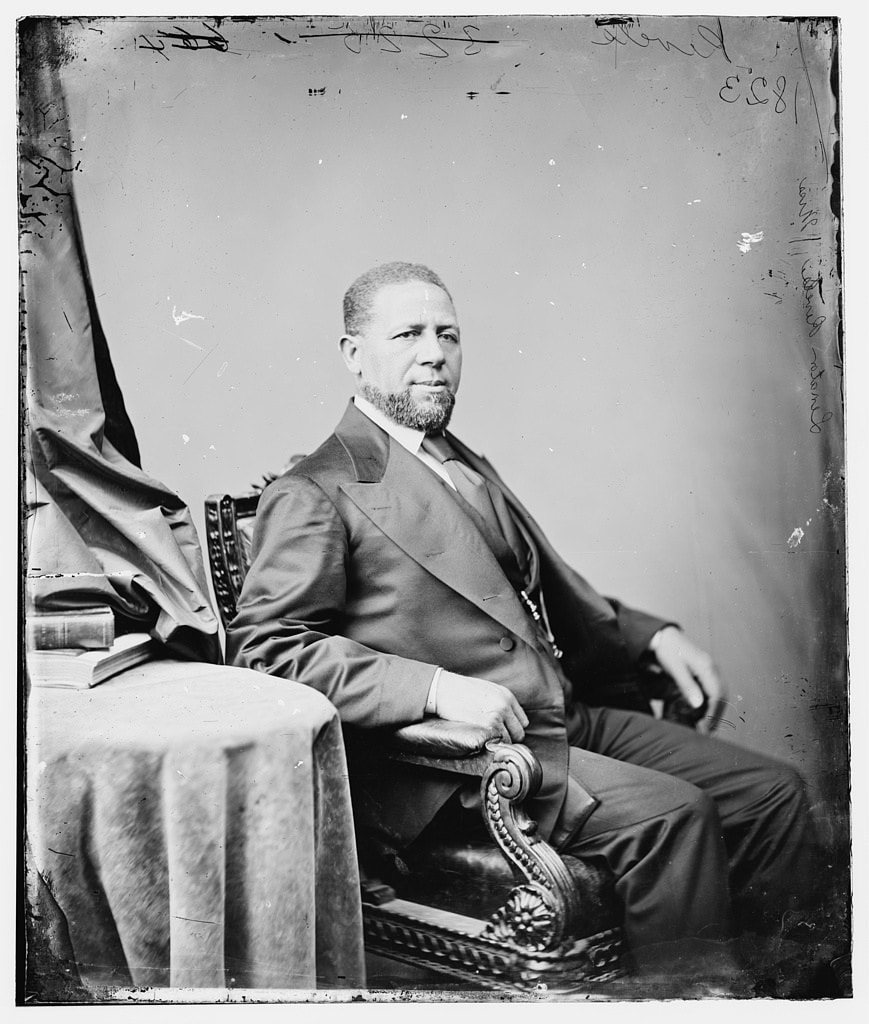
The 15th Amendment was ratified in 1870, granting Black men the right to vote. Within months, Hiram R. Revels of Mississippi — born in Fayetteville, North Carolina — was seated in the United States Senate, filling the seat once held by Jefferson Davis. Joseph H. Rainey of South Carolina became the first Black member of the House of Representatives. Both men arrived in Washington under threat of violence, in a country that had legally enslaved their people five years earlier.
Between 1870 and 1901, twenty Black men served in the United States Congress — two senators and eighteen representatives. They drafted legislation, served on committees, and argued on the floor for civil rights, education funding, and the enforcement of constitutional amendments. Then Reconstruction ended. Federal troops withdrew. Voter suppression, violence, and disenfranchisement systematically removed Black officeholders across the South. It would be 89 years before another Black man was elected to the Senate.
“The same Congress that seated Hiram Revels later watched, in silence, as the entire apparatus of Reconstruction was dismantled. The silence was a political choice.”
Two Americas — ERA IV DocumentationSen. Hiram R. Revels — First Black U.S. Senator
Born free in Fayetteville, NC, Revels became the first Black U.S. Senator in 1870, filling Jefferson Davis’s former Mississippi seat. An AME minister and educator, he argued for the restoration of voting rights for former Confederates — a position that revealed the principled idealism of Reconstruction’s Black leadership. He later became the first president of Alcorn State University.
Born Fayetteville, NCRep. Joseph H. Rainey — First Black Member of the House
Rainey, a former enslaved man from South Carolina, became the first Black member of the U.S. House of Representatives in December 1870. He served five terms, advocating for civil rights enforcement and equal protection. His floor speeches documented the violence and terror being used to suppress Black political participation in the South — a record that Congress largely ignored.
Five Terms · House Floor SpeechesSen. Blanche Bruce — Only Black Senator to Serve Full Term in 19th Century
Born enslaved in Virginia, Bruce became the first Black senator to serve a full six-year term, representing Mississippi from 1875 to 1881. He chaired the Pensions Committee, advocated for Chinese immigrants’ rights, and investigated the Freedmen’s Bank collapse that had devastated Black depositors. After his term, no Black senator was elected again until Edward Brooke in 1967 — 86 years later.
86-year gap to next Black senator–1954
Shut out of the ballot box, they built the infrastructure of the movement.
From 1901 to 1929, not a single Black person served in Congress. Poll taxes, literacy tests, grandfather clauses, and the violence of white supremacist organizations had effectively disenfranchised Black voters across the South. The political work during this era moved underground and into institutions — the NAACP (1909), the Urban League (1910), the Brotherhood of Sleeping Car Porters (1925).
Oscar De Priest of Illinois broke the 28-year congressional gap in 1929, becoming the first Black congressman from the North and the first Black congressman of the 20th century. Mary McLeod Bethune became the first Black woman to head a federal agency when FDR appointed her director of the Division of Negro Affairs in 1936 — advising the president directly on matters affecting Black Americans during the New Deal. Political power, denied through elections, was built through organization.
“When they could not vote, they organized. When they could not run for office, they advised presidents. The political record of this era is not absence — it is adaptation.”
Two Americas — ERA V DocumentationNAACP Founded — Political Infrastructure Under Suppression
The National Association for the Advancement of Colored People was founded in 1909 in response to the Springfield, Illinois race riot. Co-founded by W.E.B. Du Bois, Ida B. Wells, and others, it became the primary legal and political organization fighting disenfranchisement, lynching, and segregation. Its Legal Defense Fund would later argue Brown v. Board of Education.
Legal Defense · Political OrganizingRep. Oscar De Priest — Breaking the 28-Year Gap
De Priest, a Republican from Chicago, ended the 28-year absence of Black representation in Congress. He used his platform to introduce anti-lynching legislation, oppose segregation in the Civilian Conservation Corps, and document conditions in federal facilities. His election demonstrated that Northern Black political power could be mobilized even when Southern Black voters were effectively disenfranchised.
First Black Congressman of 20th CenturyMary McLeod Bethune — First Black Woman to Head a Federal Agency
FDR appointed Bethune director of the Division of Negro Affairs of the National Youth Administration in 1936 — making her the first Black woman to head a federal agency. She organized the Federal Council on Negro Affairs (the “Black Cabinet”), coordinating Black advisors across the New Deal. She used direct access to Eleanor Roosevelt to advance civil rights policy at the highest level of government.
Federal Cabinet · FDR Advisor–1970
They used the courts when the Congress would not act. Then they used the streets when the courts moved too slowly.
Thurgood Marshall argued 32 cases before the Supreme Court and won 29 of them. His most consequential victory — Brown v. Board of Education (1954) — overturned the “separate but equal” doctrine established in Plessy v. Ferguson in 1896. In 1967, President Johnson appointed Marshall to the Supreme Court, making him the first Black Justice in American history. He had spent his career using the Constitution against the system that had built itself on denying its promises.
The Civil Rights Act of 1964 and the Voting Rights Act of 1965 were not gifts from a benevolent government. They were the legislative result of sustained political pressure — marches, sit-ins, economic boycotts, legal challenges, and the documented brutality of those who tried to stop them. Fannie Lou Hamer challenged the all-white Mississippi delegation at the 1964 Democratic National Convention in testimony that was broadcast nationally and changed the internal politics of the Democratic Party permanently.
“I’m sick and tired of being sick and tired.”
Fannie Lou Hamer · 1964 Democratic National ConventionThurgood Marshall — Brown v. Board of Education
Marshall argued Brown v. Board of Education before the Supreme Court, overturning Plessy v. Ferguson’s “separate but equal” doctrine after 58 years. He won 29 of 32 Supreme Court cases. In 1967, he became the first Black Supreme Court Justice. His legal career is the most consequential single-person contribution to constitutional equality in American history.
29/32 Supreme Court WinsThe Voting Rights Act — The Political Result of the Movement
The Voting Rights Act of 1965 outlawed discriminatory voting practices that had disenfranchised Black voters since Reconstruction. It was the direct legislative result of the Selma to Montgomery marches, the murder of voting rights activists, and decades of organized political pressure. Black voter registration in the South increased by millions within two years of its passage.
Selma · Political Pressure · LawFannie Lou Hamer — The 1964 DNC Testimony
Hamer, a sharecropper turned voting rights activist, testified before the Credentials Committee of the 1964 Democratic National Convention about the beatings and economic retaliation she faced for registering to vote in Mississippi. President Johnson called a press conference to interrupt the live broadcast. The testimony was replayed in full that evening and changed the course of the convention.
Johnson Interrupted the Broadcast–Now
The first Black president. The first Black vice president. The first Black woman on the Supreme Court. Every one arrived against a documented history of exclusion.
Barack Obama was elected the 44th President of the United States on November 4, 2008 — 143 years after the end of the Civil War, 43 years after the Voting Rights Act, and 38 years after the first Black mayor of a major American city. His election did not end the structural inequalities documented throughout this archive. It demonstrated that the political system could, under the right conditions, reflect the full range of American citizenship.
In 2021, Kamala Harris became the first Black and first South Asian Vice President of the United States. In 2022, Ketanji Brown Jackson became the first Black woman confirmed to the United States Supreme Court — 232 years after the Court was established. Each of these firsts carries within it the weight of all the people who were systematically excluded before them.
Barack Obama — 44th President of the United States
Obama’s election as the first Black president marked a documented shift in American political possibility. He was re-elected in 2012. His presidency operated under the same structural constraints that affect all presidencies — and under additional scrutiny, obstruction, and delegitimization efforts documented throughout his two terms. The significance of his election and the resistance to it are both part of the record.
44th President · Two TermsKamala Harris — First Black and South Asian Vice President
Harris was elected Vice President in 2020, becoming the first woman, first Black American, and first person of South Asian descent to hold the office. Previously California Attorney General and U.S. Senator, she became the Democratic nominee for president in 2024. Her career represents the intersection of multiple historical exclusions — gender, race, and ethnicity — in a single political trajectory.
First Woman · First Black VPJustice Ketanji Brown Jackson — First Black Woman on the Supreme Court
Jackson was confirmed to the Supreme Court in April 2022 — 232 years after the Court’s establishment. A federal judge and former public defender, she succeeded Justice Stephen Breyer. Her confirmation hearings were marked by documented attempts at delegitimization. Her appointment completed the arc that began when Thurgood Marshall first argued before the Court in 1938 as a young NAACP attorney.
232 Years · First Black WomanBlack Senators
The Suppressed Political Record
The political suppression of Black Americans was not accidental. It was systematic, documented, and enforced through law, violence, and economic coercion. Poll taxes, literacy tests, grandfather clauses, white primaries, and the threat of lynching created a nearly complete barrier to Black political participation across the South from the end of Reconstruction through the Voting Rights Act of 1965.
Every Black political gain documented on this page was contested. Reconstruction was followed by Redemption. The Voting Rights Act was followed by systematic efforts at voter suppression that continue to the present day. The 2013 Supreme Court decision in Shelby County v. Holder gutted the preclearance provisions of the Voting Rights Act. Within hours of the decision, several states implemented voter ID laws and other restrictions previously blocked under the Act.
The Political Record in Our Backyard
Hiram Revels — Born in Fayetteville
The first Black U.S. Senator was born in Fayetteville, North Carolina in approximately 1827. Revels was born free to parents of mixed African and Croatan Indian heritage. He left North Carolina as a young man, ultimately becoming a minister and educator in the Midwest before his historic Senate appointment. Cumberland County is the birthplace of the first Black senator.
NC Black Legislators — Reconstruction Era
North Carolina sent four Black men to Congress during Reconstruction: John A. Hyman, James E. O’Hara, Henry P. Cheatham, and George H. White. White, who served until 1901, delivered a farewell address on the House floor that documented the systematic removal of Black political representation — and predicted that Black Americans would return to Congress. They did, 28 years later.
George H. White — “Phoenix Will Rise”
Rep. George H. White of North Carolina gave his farewell address to Congress in January 1901 after serving two terms. In it, he said: “This, Mr. Chairman, is perhaps the Negroes’ temporary farewell to the American Congress; but let me say, Phoenix-like he will rise up some day and come again.” He was right. His speech stands as one of the most documented moments of political prophecy in American congressional history.
NC Redistricting — Cumberland County Representation
Cumberland County’s political representation has been repeatedly affected by redistricting litigation in North Carolina. Cases challenging racially gerrymandered congressional and state legislative maps have shaped and reshaped Black voting power in the Fayetteville area through the present day. The legal fights over representation here are a direct continuation of the Reconstruction-era political record.
The record is incomplete.
We are completing it.
This page documents confirmed political milestones across nine eras. Additional entries are in research and drafting — from Reconstruction-era state legislators to present-day representation battles. Every entry will include Chicago-style citations, primary sources, and NC local connections where documentable.