
They Built
the Schools.
Made illegal to read. Denied entry to universities. Taxed to fund schools their children could not attend. African Americans built 105 HBCUs, 5,000 Rosenwald schools, and an educational tradition that outlasted every attempt to destroy it.
–1865
Era
They made it a crime to teach a Black person to read. That tells you exactly how much literacy was worth.
The South Carolina Negro Act of 1740 was among the first laws in the American colonies to explicitly prohibit teaching enslaved people to read or write. By the 1830s, following Nat Turner’s rebellion, virtually every Southern state had enacted anti-literacy laws targeting Black people — enslaved and free. The law understood that literacy was power. The law was right.
Against these laws, enslaved and free Black people pursued education with extraordinary determination. Frederick Douglass taught himself to read using a children’s spelling book, trading bread with white children for reading lessons. He later wrote: “Once you learn to read, you will be forever free.” Susie King Taylor learned to read illegally in Savannah, Georgia, disguising her lessons in a covered basket. She later operated a school for formerly enslaved people during the Civil War — becoming the first Black Army nurse and teacher in the Union Army.
“It is easier to build strong children than to repair broken men.”
Frederick DouglassAnti-Literacy Laws — Education as a Criminal Act
Over 40 states and territories enacted laws prohibiting the education of enslaved people before the Civil War. Penalties ranged from fines to imprisonment to corporal punishment — for both the teacher and the student. The laws were a direct acknowledgment that literacy threatened the slave system. The frequency with which they were violated — in hidden schoolrooms, in church basements, in private homes — is a measure of how much Black Americans valued what the law tried to deny them.
Education CriminalizedFrederick Douglass — Self-Educated, Self-Liberated
Douglass taught himself to read using a children’s speller, trading food with white boys who taught him letters. He consumed every written word he could find. He escaped slavery in 1838. He became the most photographed American of the 19th century — a deliberate strategy to counter the dehumanizing imagery of slavery. His three autobiographies are among the most important documents in American literature. The literacy they banned him from became his primary weapon.
Most Photographed American · 19th CenturySusie King Taylor — First Black Army Teacher
Taylor learned to read illegally in Savannah, hiding her lessons. When the Civil War reached the Sea Islands, she operated a school for formerly enslaved adults and children in the contraband camps. She served as a nurse and laundress with the 33rd United States Colored Troops — the first Black regiment organized in the South — and taught soldiers to read. She wrote the only known memoir by a Black woman who served with the Union Army.
First Black Army Teacher–1954
When every white institution closed its doors, they built 107 of their own.
The first Historically Black College — Cheyney University in Pennsylvania — was founded in 1837. Over the next century, 107 HBCUs were established across the country, the overwhelming majority in the years immediately following emancipation. They were founded by Black churches, Black denominations, Black communities, and occasionally by white missionary organizations — all responding to the same reality: that white higher education excluded Black students entirely.
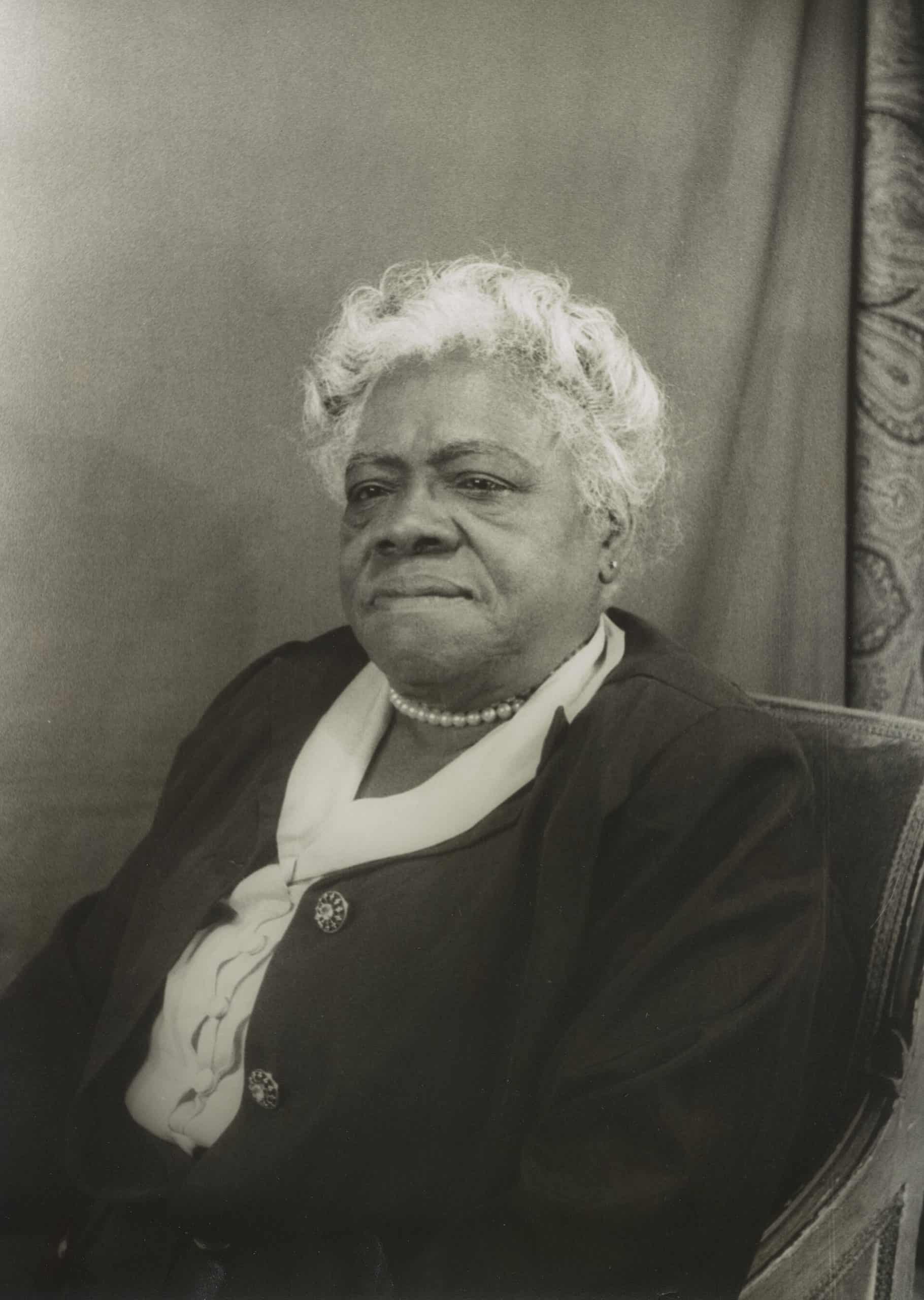
Mary McLeod Bethune founded Bethune-Cookman College in Daytona Beach, Florida in 1904 — starting with $1.50, five students, and a rented house. She sold sweet potato pies to raise money. She turned a garbage dump into a campus. She became an advisor to four presidents. HBCUs produced 80% of Black doctors, 50% of Black lawyers, and the majority of Black teachers in America before integration opened other doors — and they remain essential today.
“Invest in a human soul. Who knows — it might be a diamond in the rough.”
Mary McLeod Bethune, founder — Bethune-Cookman College, 1904Mary McLeod Bethune — $1.50 and a Vision
Bethune founded the Daytona Educational and Industrial Training School for Negro Girls in 1904 with $1.50, five students, and faith. She sold sweet potato pies to raise funds. The school became Bethune-Cookman College. She founded the National Council of Negro Women in 1935, advised FDR as part of his “Black Cabinet,” and directed the Division of Negro Affairs in the National Youth Administration — the highest federal position held by a Black woman to that point.
HBCU Founded · $1.50 StartBooker T. Washington — Tuskegee Institute
Washington founded Tuskegee Normal and Industrial Institute in 1881 in Alabama — a state that had recently ended Reconstruction. He built it literally: students made the bricks and constructed the buildings. Tuskegee trained Black teachers, farmers, and tradespeople for the Southern economy. George Washington Carver conducted his agricultural research there. The Tuskegee Airmen trained there. Washington’s philosophy of industrial education was contested — but the institution he built was undeniable.
Tuskegee Institute · 1881Howard University — The Capstone
Howard University was chartered by Congress in 1867 and opened in 1868. It became the intellectual center of Black America — producing Thurgood Marshall, Toni Morrison, Kamala Harris, Chadwick Boseman, and generations of Black lawyers, doctors, scientists, artists, and leaders. Its law school trained the attorneys who argued Brown v. Board. Its medical school trained the majority of Black physicians in America for decades. It is called “The Capstone of Negro Education.”
The Capstone · 1867The Rosenwald Schools — 4,977 Buildings. Black Communities Paid Half. The State Paid Nothing It Didn’t Have To.
Between 1912 and 1932, Julius Rosenwald — the president of Sears, Roebuck and Company and a Jewish philanthropist deeply influenced by Booker T. Washington — partnered with Black communities across the South to build schools for Black children. The program was simple in design and radical in impact: Rosenwald’s fund would contribute a portion of the construction cost if the local Black community raised matching funds and the local white school board contributed as well.
The Black communities consistently raised their share — often through church fundraisers, personal donations, and in-kind labor — despite being the same communities that paid local taxes already being used to fund white schools they could not attend. By 1932, the Rosenwald Fund had helped build 4,977 schools, shops, and teacher homes across 15 Southern states. At its peak, one in every three Black children in the rural South was educated in a Rosenwald School.
North Carolina had 813 Rosenwald Schools — the most of any state. Cumberland County was among the counties served. The schools produced generations of Black teachers, doctors, lawyers, and community leaders. Most of the buildings were demolished after integration — the physical record of what Black communities built for themselves nearly erased from the landscape. Historians and preservationists have spent decades documenting what remains.
“They taxed us to build schools we couldn’t enter. Then we taxed ourselves again to build our own. And they called it charity.”
Two Americas — ERA V Education DocumentationCitation: Hoffschwelle, Mary S. The Rosenwald Schools of the American South. Gainesville: University Press of Florida, 2006, pp. 1–30, 88–112. See also: National Trust for Historic Preservation. “Rosenwald Schools.” Saving Places. Washington: NTHP, 2002. savingplaces.org/rosenwald. North Carolina count: Ayers, Edward L., and Scott Nesbit. “Rosenwald Schools in NC.” Virginia Center for Digital History. Charlottesville: University of Virginia, 2011.
Selected HBCUs — The Institutions They Built
Twenty of the 107 Historically Black Colleges and Universities founded when every other door was closed. Each is a documented act of community investment in the face of systematic exclusion. Sorted chronologically by founding year.
Citations — Chicago Style
- Roebuck, Julian B., and Komanduri S. Murty. Historically Black Colleges and Universities. Westport: Praeger, 1993, p. 18.
- Dreer, Herman. The History of the African Methodist Episcopal Church in Ohio. Nashville: AME Church, 1963, pp. 44–47.
- Carson, Clayborne. In Struggle: SNCC and the Black Awakening of the 1960s. Cambridge: Harvard University Press, 1981, p. 19.
- Richardson, Joe M. A History of Fisk University, 1865–1946. Tuscaloosa: University of Alabama Press, 1980, pp. 1–12.
- Logan, Rayford W. Howard University: The First Hundred Years. New York: New York University Press, 1969, pp. 3–20.
- Fayetteville State University. “Our History.” FSU Institutional History. Fayetteville: FSU Office of Communications, 2023. fsu.edu/about/history.
- St. Augustine’s University. “History and Mission.” Institutional Profile. Raleigh: SAU Office of Institutional Advancement, 2022. st-aug.edu/about.
- Peabody, Francis Greenwood. Education for Life: The Story of Hampton Institute. New York: Doubleday, 1918, pp. 1–30.
- Jelks, Randal Maurice. Benjamin Elijah Mays, Schoolmaster of the Movement. Chapel Hill: University of North Carolina Press, 2012, pp. 88–104.
- Dillard University. “History.” Dillard University Institutional History. New Orleans: Office of Communications, 2023. dillard.edu/about/history.
- Summerville, James. Educating Black Doctors: A History of Meharry Medical College. Tuscaloosa: University of Alabama Press, 1983, pp. 1–25.
- Southern University System. “System History.” Southern University and A&M College System. Baton Rouge: SUS Office of Academic Affairs, 2023. sus.edu/about.
- Washington, Booker T. Up From Slavery. New York: Doubleday, 1901. Repr. Oxford: Oxford University Press, 1995, pp. 108–140.
- Read, Florence M. The Story of Spelman College. Princeton: Princeton University Press, 1961, pp. 1–18.
- Florida A&M University. “FAMU History.” Institutional Profile. Tallahassee: FAMU Office of Communications, 2023. famu.edu/about/history.
- Wolff, Miles. Lunch at the 5 & 10. Chicago: Ivan R. Dee, 1970, pp. 14–22.
- Robinson, Eddie. Never Before, Never Again. New York: St. Martin’s Press, 1999. See also Hurd, Michael. Thursday Night Lights. Austin: University of Texas Press, 2017, pp. 44–46.
- McCluskey, Audrey Thomas, and Elaine M. Smith, eds. Mary McLeod Bethune: Building a Better World. Bloomington: Indiana University Press, 1999, pp. 3–28.
- Xavier University of Louisiana. “Xavier History.” Institutional Profile. New Orleans: Xavier Office of Communications, 2023. xula.edu/about/history.
- Norfolk State University. “NSU History.” Institutional Profile. Norfolk: NSU Office of Institutional Advancement, 2023. nsu.edu/about/history.
–Now
Integration opened the doors. It did not end the fight. The fight simply moved inside.
Brown v. Board of Education (1954) declared segregated schools unconstitutional. The implementation was contested at every level — from Little Rock’s Central High School in 1957, where the Little Rock Nine walked through a screaming mob protected by federal troops, to the University of Alabama in 1963, where Governor George Wallace stood in the schoolhouse door until President Kennedy federalized the National Guard. Integration was not a gift. It was a siege.
Ruby Bridges was six years old when she integrated William Frantz Elementary School in New Orleans in 1960, escorted by federal marshals past crowds screaming death threats. James Meredith enrolled at the University of Mississippi in 1962, triggering riots that killed two people and required 30,000 federal troops to suppress. In 2023, the Supreme Court struck down race-conscious admissions in SFFA v. Harvard — ending a tool that had been used for less than 60 years to address 250 years of documented exclusion.
“Education is the passport to the future, for tomorrow belongs to those who prepare for it today.”
Malcolm XThe Little Rock Nine — The Schoolhouse Under Siege
Nine Black students enrolled at Central High School in Little Rock, Arkansas in September 1957, three years after Brown v. Board. Arkansas Governor Orval Faubus called out the National Guard to block them. President Eisenhower federalized the Arkansas Guard and deployed the 101st Airborne Division to escort the students inside. The students attended under military escort for the full school year. One student, Minnijean Brown, was suspended for retaliating against her tormentors.
101st Airborne Required · 1957Ruby Bridges — Six Years Old, Federal Escort
Ruby Bridges was six years old when she integrated William Frantz Elementary School — walked past crowds screaming death threats, escorted by four federal marshals. She was the only student in her class for most of the year; white parents pulled their children rather than let them sit with her. Her teacher, Barbara Henry, was the only white teacher who would instruct her. Bridges continued. The school continued. The mob did not win.
Age 6 · Federal Escort RequiredSFFA v. Harvard — Affirmative Action Ended
The Supreme Court struck down race-conscious admissions at Harvard and UNC-Chapel Hill in June 2023, effectively ending affirmative action in higher education. The policy had been in use for less than 60 years — implemented to address centuries of documented exclusion. Its elimination came at a moment when HBCUs were reporting record enrollment as students sought campuses where their presence was structurally valued. The legal record continues.
60 Years of Access · Ended 2023Legally Enforced
Educational Exclusion
The Deliberate Denial
From the first colonial anti-literacy laws in the 1740s to the Brown v. Board ruling in 1954, the American educational system was deliberately structured to deny Black children access to quality education — first by law, then by resource inequality, district boundary manipulation, and discriminatory funding formulas that persist today.
The achievement gap in American education is not a mystery — it is the documented result of 125 years of legally enforced exclusion, followed by 70 years of structurally unequal integration. The HBCUs, the freedom schools, the church classrooms, the hidden lessons in slave quarters — these were not alternatives to the American educational system. They were the American educational system for Black Americans, built against every obstacle the law could construct.
The Education Record in Our Backyard
Fayetteville State University — Founded by the Community
FSU was founded in 1867 by seven Black community members — including former enslaved people — who pooled $1,000 to establish the Howard School for the education of Black children. It became a state normal school in 1877 and a university in 1969. It is the oldest HBCU in North Carolina and the second oldest state-supported HBCU in the nation. Its founding is among the most direct local expressions of the education story documented on this page.
NC A&T Sit-Ins — Students as Activists
On February 1, 1960, four North Carolina A&T students — Ezell Blair Jr., Franklin McCain, Joseph McNeil, and David Richmond — sat down at the Woolworth’s lunch counter in Greensboro and refused to leave when denied service. The Greensboro sit-ins sparked a wave of similar protests across the South and directly contributed to the formation of the Student Nonviolent Coordinating Committee (SNCC). HBCU students were the organizing engine of the sit-in movement.
Cumberland County Schools — The Living Record
Cumberland County Schools serve a majority-minority student population in a district shaped by the legacy of segregation, military demographics, and ongoing resource disparities. Documented racial achievement gaps, suspension rate disparities, and inequitable distribution of advanced coursework are active Living Record entries for Two Americas. The education story in Cumberland County is not historical — it is present tense, measurable, and being documented.
The record is incomplete.
We are completing it.
This page documents confirmed education milestones and the institutions built against systematic exclusion. Additional entries are in research — from colonial freedom schools to present-day equity battles. Every entry includes Chicago-style citations, primary sources, and NC local connections where documentable.