
What Happened
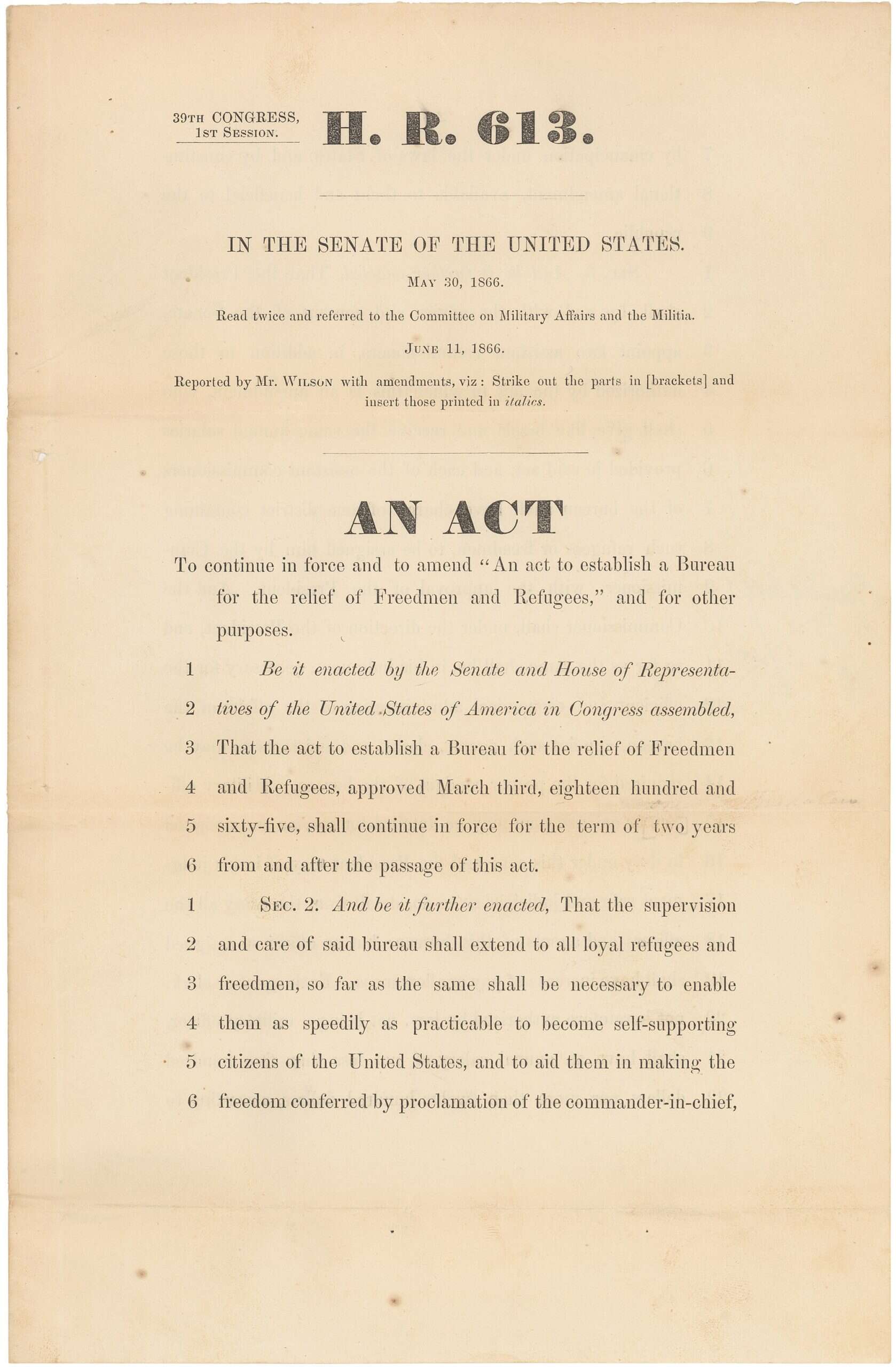
The Bureau of Refugees, Freedmen, and Abandoned Lands — known as the Freedmen’s Bureau — was established by Congress on March 3, 1865, one month before the Civil War ended. It was the first federal social welfare agency in American history: a government institution charged with managing the transition from slavery to freedom for approximately four million people who had been legally property twenty-four hours before they were legally persons. The Bureau operated from 1865 to 1872, maintaining field offices throughout the former Confederate states. It negotiated labor contracts, established schools, provided medical care, registered marriages, reunited families separated by the slave trade, and attempted to adjudicate disputes between formerly enslaved people and their former enslavers. In North Carolina, the Bureau operated a field office in Fayetteville from 1865 to 1868. The records of that office — held at the National Archives — are the most significant primary source archive for the history of the Black community of Cumberland County in the immediate post-war period.
Historical Context
The Freedmen’s Bureau operated in a political environment of continuous, organized white resistance. Former enslavers who had been stripped of their property — the people they had enslaved — responded to the Bureau’s presence with a combination of legal obstruction, fraud, and physical violence against Bureau agents and the formerly enslaved people the Bureau was attempting to protect. President Andrew Johnson, who had assumed the presidency after Lincoln’s assassination, was hostile to Reconstruction and systematically undermined the Bureau’s authority by restoring confiscated lands to former Confederates, pardoning Confederate officers, and vetoing legislation that would have extended the Bureau’s power. Congress overrode Johnson’s vetoes, but the political contest over the Bureau’s mandate limited what it could accomplish and made its ultimate termination in 1872 a political inevitability.
In Cumberland County, the Fayetteville field office documented the full range of the Bureau’s work: negotiating labor contracts between formerly enslaved people and white landowners; recording the marriages of couples whose enslaved status had denied them legal marriage; processing the requests of parents searching for children who had been separated by the domestic slave trade; adjudicating complaints of violence and fraud by white employers against Black workers; and supporting the establishment of Black schools, including the Howard School founded in 1867.
Who Was Affected
Every formerly enslaved person in Cumberland County was affected by the Freedmen’s Bureau, either directly through the field office’s services or indirectly through the legal and political framework the Bureau’s presence created. The Bureau’s labor contract negotiations gave formerly enslaved people, for the first time, formal legal standing in their economic relationships with white employers — standing that was limited, contested, and frequently violated, but that represented a structural change from the total legal nullity of enslaved status. The Bureau’s school support made possible the founding of the Howard School and the entire Black educational infrastructure of Reconstruction-era Cumberland County.
Long-Term Consequences
The Freedmen’s Bureau’s termination in 1872 — under sustained assault from white Southern Democrats and a Republican Party losing its political appetite for Reconstruction — left the formerly enslaved people it had served without the institutional protection that had partially compensated for their lack of land, capital, and political power. The Bureau’s failure was not total: the schools it had helped establish survived its termination, and the records it generated — labor contracts, marriage registrations, family reunion requests, complaints of violence — constitute an irreplaceable primary source archive that African American families use today to trace their ancestry before the 1870 census.
The deeper failure was structural. The Bureau attempted to manage a transition from slavery to freedom without addressing the foundational problem: the formerly enslaved had no land. Without land, they had no economic independence. Without economic independence, formal legal freedom was a condition that white employers, white sheriffs, white judges, and white landlords could effectively negate through the labor contracts, vagrancy laws, crop lien systems, and debt peonage arrangements that followed the Bureau’s departure. Thaddeus Stevens, the radical Republican congressman from Pennsylvania, understood this clearly: he proposed confiscating Confederate plantation lands and distributing forty-acre parcels to the formerly enslaved. His proposal was defeated. “Forty acres and a mule” became the most famous unkept promise in American history.
Connection to Present Day
The Freedmen’s Bureau records are an active genealogical resource. The National Archives holds the Bureau’s records organized by state and local office — the Fayetteville NC field office records are in Record Group 105 at the National Archives. FamilySearch, in partnership with the Smithsonian’s National Museum of African American History and Culture, has digitized and indexed millions of Freedmen’s Bureau records, making them searchable by name. For African American families in Cumberland County researching their ancestry before the 1870 census — the first federal census to record Black Americans as named individuals — the Fayetteville field office records are the primary documentary resource. The Bureau’s failure to secure land for the formerly enslaved is the foundational cause of the Black-white wealth gap in the United States, which stands at approximately 1:8 (Black median household wealth to white median household wealth) as of 2023. The promise that was not kept in 1865 is still unkept.