
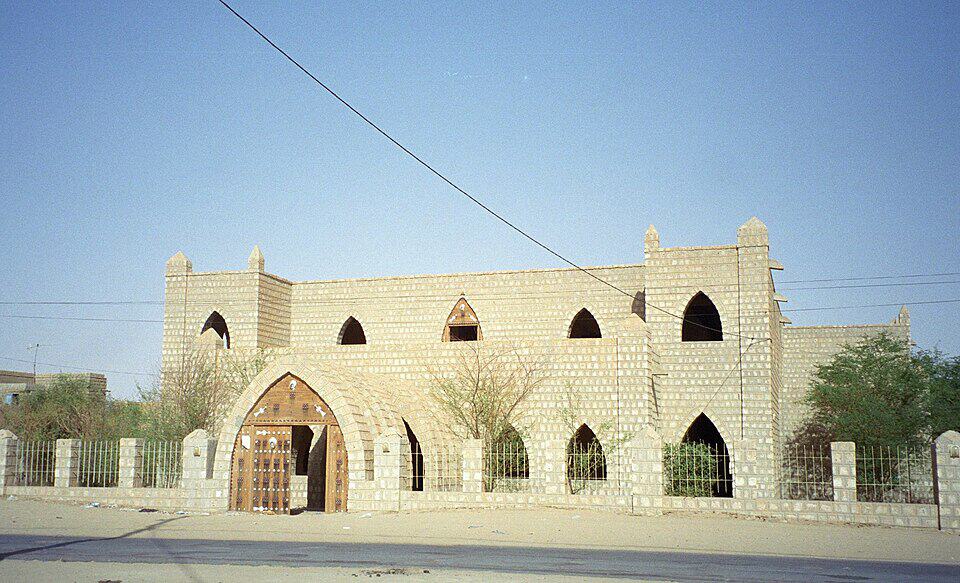
I. What Was There Before It Was Destroyed
Before 1591, Timbuktu was one of the wealthiest and most intellectually sophisticated cities on Earth. Entry C-5 of this Prologue documents what it had built: the Sankore Madrasah founded in 989 CE — older than Oxford by more than a century — housing between 400,000 and 700,000 manuscripts on subjects ranging from astronomy and mathematics to medicine, law, and governance. Twenty-five thousand students in a city of 100,000. A commercial manuscript economy in which books traded at higher value than gold. A scholarly community whose members were recognized as peers by the learned institutions of Cairo, Tunis, Fez, and Mecca, and who were regularly appointed to professorships across the Islamic world.
This entry documents what happened to that when an armed force arrived with firearms.
II. The Army That Crossed the Sahara
The Sa’di dynasty of Morocco, under Sultan Ahmad al-Mansur, dispatched an army across the Sahara in late 1590. The force was commanded by Judar Pasha, a man born in Spain — the son of enslaved parents, himself enslaved and castrated as a child, raised in the Moroccan court — who had risen to military command. The army numbered approximately 4,000 men: Moroccan infantry, Andalusian renegades, and Spanish mercenaries, equipped with arquebuses and cannon. They crossed approximately 1,500 miles of Saharan desert in a march that lasted several months, losing a significant portion of their number to the crossing itself before they reached the Niger bend.
Sultan Ahmad al-Mansur’s motivation was gold. The Songhai Empire controlled the trans-Saharan trade routes and the goldfields that had funded Mali’s wealth and were now funding Songhai’s. The sultan had sent diplomatic demands to Askia Ishaq II, the Songhai emperor, demanding tribute and control of the Taghaza salt mines. Askia Ishaq II refused. The army was the response.
The Songhai army met them at Tondibi on March 13, 1591. The Songhai force was numerically much larger — contemporary accounts estimate tens of thousands, though these figures are contested in the scholarly literature — but armed with traditional weapons against the Moroccan arquebuses and artillery. The battle lasted less than an hour. Askia Ishaq II fled. The Songhai Empire, which had administered 1.4 million square miles and governed between 10 and 25 million people, ceased to function as a state.
III. The Occupation of Timbuktu
Judar Pasha entered Gao, the Songhai capital, in April 1591. He entered Timbuktu shortly after. The city did not resist militarily — its scholars were not soldiers — and the Moroccan force established a garrison. What happened next was not the governance of a conquered city. It was an extraction.
The scholars of Timbuktu were not neutral in the eyes of the occupying force. They were the ideological infrastructure of the Songhai state — the judges who administered Islamic law, the advisors who counseled the Askia dynasty, the teachers who trained the administrative class, the writers who recorded the history of the empire. They were also, in some cases, critics of the occupation on Islamic legal grounds: the Sa’di dynasty’s authorization of the invasion had been disputed by Islamic scholars on the grounds that the Songhai were a Muslim state and therefore could not be legitimately attacked by another Muslim ruler. Ahmad Baba had been among those who held this view.
The Moroccan administration’s response to the scholar class was arrest, confiscation, and deportation. The specific trigger for Ahmad Baba’s arrest, in late 1593 or early 1594, appears to have been his refusal to acknowledge the legitimacy of the Moroccan authority and his continued issuance of legal opinions — fatwas — that implicitly challenged it. He was arrested at his home. His personal library of approximately 1,600 volumes was confiscated by the Moroccan commander — a collection that contemporary accounts describe as among the finest private libraries in Timbuktu, assembled over decades. He was deported in chains to Marrakesh along with other scholars and their families.
IV. Ahmad Baba in Exile
Ahmad Baba al-Timbukti arrived in Marrakesh in chains in 1594. He was fifty-eight years old. He had been the chancellor of the University of Sankore, the author of more than sixty works, and one of the most respected scholars in the Islamic world. He was now a deportee in a foreign city under the authority of the dynasty that had destroyed his civilization.
He did not stop working.
In Marrakesh, the Moroccan scholarly community eventually recognized his stature. He was invited to teach publicly — an acknowledgment of his learning that the political situation could not entirely suppress. He taught in Marrakesh for approximately fourteen years. He continued to write: responsa to legal questions, biographical dictionaries of West African scholars, theological treatises. He corresponded with scholars across the Islamic world. He argued, in writing, that the scholars who had been deported from Timbuktu were being held unjustly. He petitioned Sultan Ahmad al-Mansur, by name, for the return of his library.
The petition was partially granted. Some of his books were returned. Not all. The remainder were absorbed into Moroccan institutional collections or dispersed through the manuscript market.
In 1607 — after Ahmad al-Mansur’s death in 1603 and a period of political instability in Morocco — Ahmad Baba was permitted to return to Timbuktu. He had been in exile for thirteen years. He returned to a city whose intellectual infrastructure had been permanently disrupted. He continued to teach and write until his death in 1627. His final years were productive: he wrote more than a dozen additional works, including the Mi’raj al-su’ud (1615), his treatise arguing on Islamic legal grounds against the enslavement of free Black Africans — a text that makes him not only the greatest scholar of Timbuktu’s tradition but one of the earliest documented African voices against the Atlantic slave trade.
V. What Was Lost
The damage to Timbuktu’s intellectual life from the 1591 invasion and the subsequent Arma occupation was not the clean destruction of a fire. It was the slower damage of disruption, dispersal, and the breaking of an institutional culture.
The manuscript production economy — which had required scribes, paper merchants, binders, and a commercial market — was disrupted when the scholars who sustained it were arrested or fled. Family libraries were dispersed through the chaos of the occupation and the decades of instability that followed. The Arma — the semi-autonomous successor force that governed Timbuktu after losing contact with Marrakesh — were neither equipped nor motivated to maintain the intellectual infrastructure of the university. The enrollment of 25,000 students contracted. The manuscript production rate declined. The scholarly network that had connected Timbuktu to Cairo, Fez, and Mecca was broken.
The primary Arabic chronicles of Timbuktu’s history — the Tarikh al-Sudan by Abd al-Rahman al-Sa’di and the Tarikh al-Fattash by Mahmud Kati and Ibn al-Mukhtar — were both written in the aftermath of 1591. They are, in a very real sense, the products of scholars trying to record what the invasion had damaged. They are elegies as much as histories. Al-Sa’di, who completed the Tarikh al-Sudan around 1655, wrote as a man documenting the destruction of the world his parents had known.
VI. The Three Destructions
The 1591 invasion was the first of three distinct events that reduced Timbuktu’s manuscript tradition from an estimated 400,000–700,000 volumes to the approximately 150,000–300,000 that survive in various states of preservation today.
The second destruction was the nineteenth and twentieth-century application of the Hamitic Hypothesis — the scholarly project documented in P-2 of this Prologue — which denied the existence or African authorship of the manuscript tradition so effectively that for most of the nineteenth and twentieth centuries, Western scholarship was not looking for the manuscripts, was not funding their preservation, and was not treating them as primary sources worthy of the attention given to European or Middle Eastern archives. Neglect is a form of destruction. A manuscript that nobody looks for does not get preserved.
The third destruction was the 2012 occupation of Timbuktu by the jihadist group Ansar Dine, which deliberately burned approximately 4,203 manuscripts before being driven out by a French military intervention. The Ahmed Baba Institute — successor to the University of Sankore and the primary public manuscript repository in Timbuktu — had hidden the majority of its holdings in private homes in the weeks before the occupation, a dispersal that saved tens of thousands of documents. UNESCO oversaw restoration of damaged sites. The manuscripts that had been hidden were partially recovered, though with significant loss. The Tombouctou Manuscripts Project at the University of Cape Town and the Hill Museum and Manuscript Library have digitized more than 150,000 manuscripts to date as part of the ongoing recovery effort.
Three destructions over four centuries. The first was an army with guns. The second was a theory with textbooks. The third was fire. What survives is evidence. What is documented here is the fact that it survived at all — and the names of the people who tried to prevent it from doing so.
Long-Term Consequences
The deportation of the scholar class of Timbuktu in 1591 was the event that broke the institutional continuity of the University of Sankore. The manuscripts survived — in family collections, in the pockets of those who fled, in the institutional memory of the city’s scholarly families — but the organized knowledge production and transmission that had made Timbuktu one of the great intellectual centers of the medieval world did not survive the disruption. Timbuktu continued to be a city with scholars and manuscripts after 1591. It was never again the University of Timbuktu.
The immediate consequence for the Atlantic slave trade was documented in C-6 of this Prologue: the political vacuum left by Songhai’s collapse allowed the slave trade to expand dramatically inland across the seventeenth and eighteenth centuries. Ahmad Baba, from exile in Marrakesh, wrote against it. His treatise was a legal argument, addressed to a scholarly community, in the language of Islamic jurisprudence. It did not stop the trade. The trade was not being driven by Islamic jurisprudence. It was being driven by European demand for plantation labor, Portuguese and then British and then American shipping capacity, and the political fragmentation of West Africa that Songhai’s destruction had produced.
The scholar who wrote against the enslavement of free Black Africans from exile in Marrakesh in 1615 was writing about a trade whose infrastructure was already in place. His words survived in manuscript. The people he was writing about survived in chains. Both deserve to be in the record.