
1906-1921
ERA V β€” World Wars & Migration (1915–1954)
ContributionSecular & PoliticalStill Relevant in NC
250Years

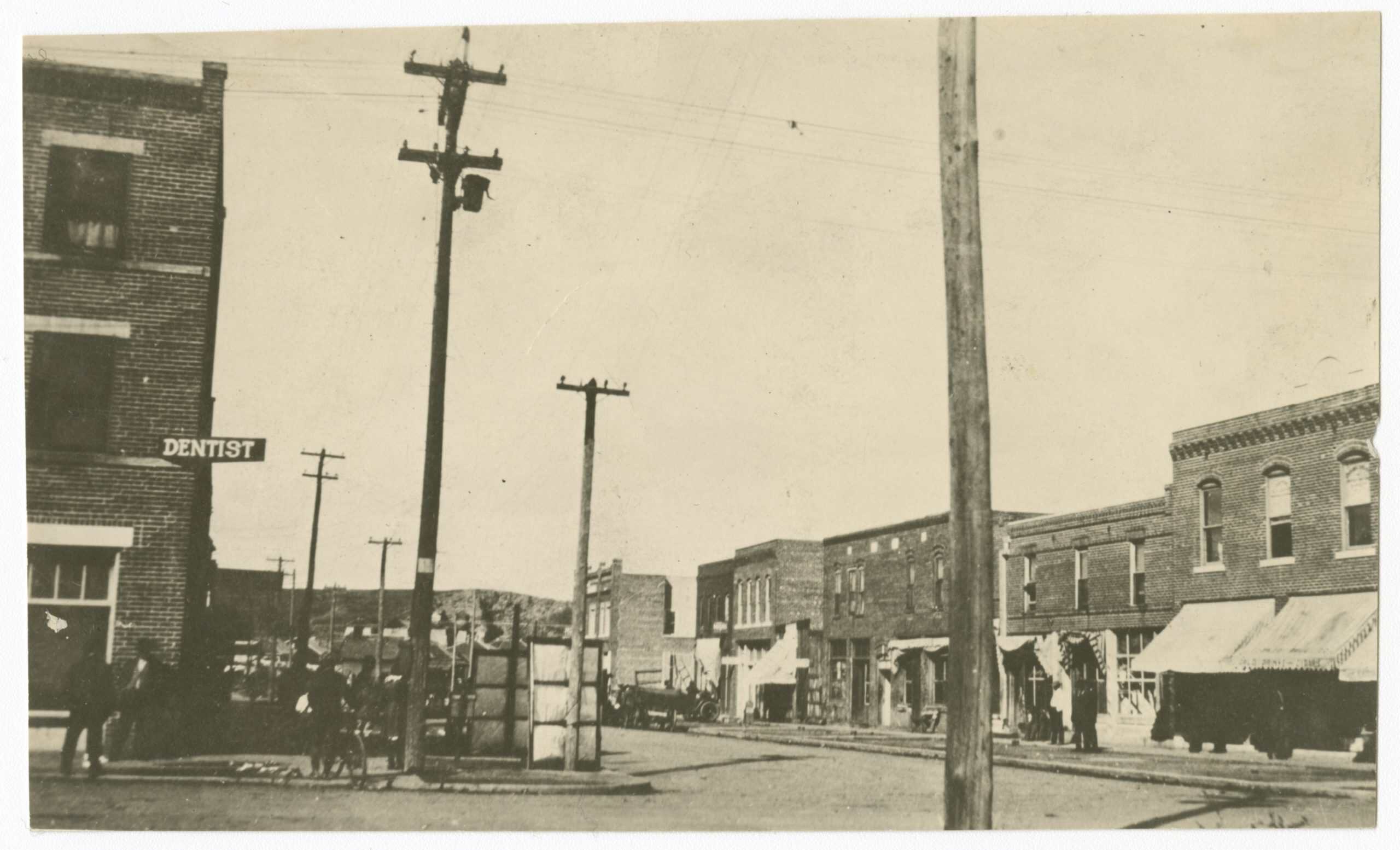
Black Wall Street: What Greenwood Built (c. 1906–1921)

Born from Jim Crow segregation laws that confined Tulsa's Black residents to one district, Greenwood became the wealthiest Black community in America β€” over 300 Black-owned businesses lined β€˜Black Wall Street’ before a white mob destroyed it in the 1921 massacre, killing hundreds and burning 35 blocks to the ground.
— Tulsa Historical Society and Museum, Greenwood Collection. Public domain β€” published before 1928. Alternately: Oklahoma Historical Society, Oklahoma City.

Durham, North Carolina's Parrish Street was known as the 'Black Wall Street of North Carolina' β€” home to NC Mutual Life Insurance (founded 1898, the largest Black-owned business in America), Mechanics and Farmers Bank, and a dense corridor of Black-owned professional and commercial enterprises built on the same self-contained economic model as Greenwood. Fayetteville's Gillespie Street Black business corridor followed the identical pattern: Black-owned shops, barbers, funeral homes, and professional offices serving a community excluded from white commercial life and turning that exclusion into economic autonomy. The Greenwood model and the Durham/Fayetteville model were not coincidences β€” they were parallel expressions of the same strategy, and both faced the same pattern of later displacement through urban renewal.

How Greenwood Was Built

The Greenwood District was born from legal exclusion and transformed by extraordinary will. Oklahoma achieved statehood in 1907 and immediately enacted some of the most aggressive Jim Crow legislation in the country β€” including laws mandating the segregation of virtually every public space. Black residents of Tulsa were forced into a corridor north of the Frisco Railroad tracks. What the white establishment intended as a quarantine, Greenwood’s founders turned into a foundation. O.W. Gurley, an Arkansas-born educator and entrepreneur, purchased land on Greenwood Avenue in 1906 and began selling lots exclusively to Black buyers. Within a decade he had built or owned more than forty properties, including a grocery store, rooming house, billiards hall, and several rental properties. His deliberate policy of keeping Greenwood’s commerce internal β€” money earned in Greenwood stayed in Greenwood β€” established the economic logic that would define the district.

The People Who Built It

J.B. Stradford built the Stradford Hotel β€” at 65 rooms, the largest Black-owned hotel in the United States at the time of its destruction. He was also a founding figure of the Tulsa NAACP chapter and a vocal advocate of armed self-defense. Dr. A.C. Jackson, trained at a time when most American medical schools refused Black applicants, was described by the Mayo Clinic as the most able Black surgeon in America. He built a thriving practice in Greenwood and was known throughout the region. Simon Berry operated a jitney bus and taxi service that became one of the district’s essential transportation networks; he later invested in aviation. Mabel Little built a beauty salon that anchored a block of Black women’s commerce. The Williams family owned the Dreamland Theatre β€” a cinema, ballroom, and gathering place that seated 750 people.

Two newspapers served the community: the Tulsa Star, edited by A.J. Smitherman, and the Oklahoma Sun. Both were organs of Black civic life β€” reporting on business, politics, sports, and the ongoing national struggle for civil rights. The Booker T. Washington High School educated Greenwood’s children with Black teachers and a Black principal. Vernon AME Church, founded in 1905, was the spiritual anchor of the community β€” one of the few structures to survive the massacre, its basement used to shelter residents during the attack. By 1921, the Greenwood District contained a dentist, a physician, a law library, a hospital, a bank, a post office substation, hotels, theaters, grocery stores, clothing shops, and professional offices of every description. The dollar, it was said, circulated through Greenwood’s economy nineteen times before it left the neighborhood.

What Greenwood Proved

The significance of what Greenwood built was not merely economic. In the context of an America that had just two years earlier deployed federal troops and deputized mobs against Black communities in Red Summer, Greenwood was a refutation. It proved that Black self-governance was viable β€” that in the absence of white institutional support, and in the face of active legal hostility, Black Americans could build hospitals, educate children, sustain a free press, create wealth, and govern community life. This was the proof that Booker T. Washington had theorized and that Greenwood’s founders had made concrete. The establishment of Greenwood preceded the Harlem Renaissance, preceded the NAACP’s legal campaign, preceded the organized labor movement of the Brotherhood of Sleeping Car Porters β€” and it was built not in the relative freedom of a northern city but under the most aggressive Jim Crow regime in the country. Its existence was an argument. That argument is why it was destroyed.

Survival and Legacy

Greenwood was rebuilt. Within a year of the massacre, despite the city of Tulsa’s attempts to rezone the district and prevent reconstruction, Black residents had rebuilt hundreds of homes and businesses β€” largely without insurance payouts, without government assistance, and in defiance of a municipal government that had participated in their destruction. The rebuilt Greenwood flourished again through the 1940s. Its second decline came not from mob violence but from urban renewal and highway construction in the 1960s and 1970s β€” the same federal policies that dismantled Black business districts across America. The Greenwood Cultural Center, established in 1995, and the 2021 centennial commission have worked to restore the historical record. The economic legacy of what was destroyed in 1921 β€” estimated at more than $200 million in present-day value when compound returns on destroyed wealth are accounted for β€” remains at the center of ongoing reparations arguments. What Greenwood built is not merely a historical artifact. It is the evidence in an unresolved legal and moral case.

1921
The Tulsa Race Massacre of 1921 β€” Black Wall Street Burned to the Ground

On the night of May 31, 1921, a white mob supported by the Tulsa Police Department and deputized civilians invaded the Greenwood District β€” the wealthiest Black community in America, known as Black Wall Street. Over 18 hours, they burned 35 square blocks, killed an estimated 300 Black residents, and left 10,000 people homeless. No one was ever charged. The city of Tulsa buried the massacre in its official record for the next seventy-five years.

1865 β€” 1872
The Freedmen’s Bureau: Black Political Power and the Promise of Reconstruction (1865–1872)

Established by Congress on March 3, 1865, the Freedmen’s Bureau was the first federal social welfare agency in American history β€” charged with managing the transition from slavery to freedom for four million people. In Fayetteville, the Bureau’s field office operated from 1865 to 1868, negotiating labor contracts, recording marriages, reuniting families separated by the slave trade, and supporting the establishment of Black schools including the Howard School (now FSU). Its records, held at the National Archives, are the most significant primary source archive for Cumberland County’s Black community in the immediate post-war period β€” and an active genealogical resource for descendants today.

1925
A. Philip Randolph & the Brotherhood of Sleeping Car Porters (1925)

In 1925, Asa Philip Randolph β€” the most dangerous Black man in America according to the U.S. Department of Justice β€” organized the Brotherhood of Sleeping Car Porters, the first Black-led labor union to win a contract with a major American corporation. Twelve years later, the Pullman Company signed. What Randolph built was not just a union β€” it was the organizational backbone of the civil rights movement.

Sources & Citations

1. Ellsworth, Scott. Death in a Promised Land: The Tulsa Race Riot of 1921. Baton Rouge: Louisiana State University Press, 1982. peer_reviewed
2. Johnson, Hannibal B. Black Wall Street: From Riot to Renaissance in Tulsa's Historic Greenwood District. Fort Worth: Eakin Press, 1998. peer_reviewed
3. Oklahoma Commission to Study the Tulsa Race Riot of 1921. Tulsa Race Riot: A Report by the Oklahoma Commission. Oklahoma City, 2001. Section III: 'Profile of the Greenwood Community.' [Source] governmentOklahoma Historical Society
4. Hirsch, James S. Riot and Remembrance: The Tulsa Race War and Its Legacy. Boston: Houghton Mifflin, 2002. peer_reviewed
5. Messer, Chris M., Thomas E. Shriver, and Alison E. Adams. 'The Destruction of Black Wall Street: Tulsa's 1921 Riot and the Eradication of Accumulated Wealth.' American Journal of Economics and Sociology 77, no. 3-4 (2018): 789-819. peer_reviewedAJES
6. Smitherman, A.J. 'Tulsa Star.' Contemporaneous issues, 1913-1921. Oklahoma Historical Society Newspaper Collection. [Source] primaryOklahoma Historical Society
7. Brophy, Alfred L. Reconstructing the Dreamland: The Tulsa Riot of 1921 β€” Race, Reparations, and Reconciliation. New York: Oxford University Press, 2002. peer_reviewed
← What They Built, What They Defended: African Civilization and Resistance at the Berlin Conference β€” and the Pan-African Tradition That Followed (1884–1900)
Return to Timeline
A. Philip Randolph & the Brotherhood of Sleeping Car Porters (1925) →